Food safety training in restaurants: why reminders no longer work
Non-conformities found during inspections rarely reflect missing knowledge. They reflect gestures that give way during the rush.
Read the article
VR does not solve a training problem, it solves an application problem. Here is where it produces a measurable effect, and where it burns budget for nothing.
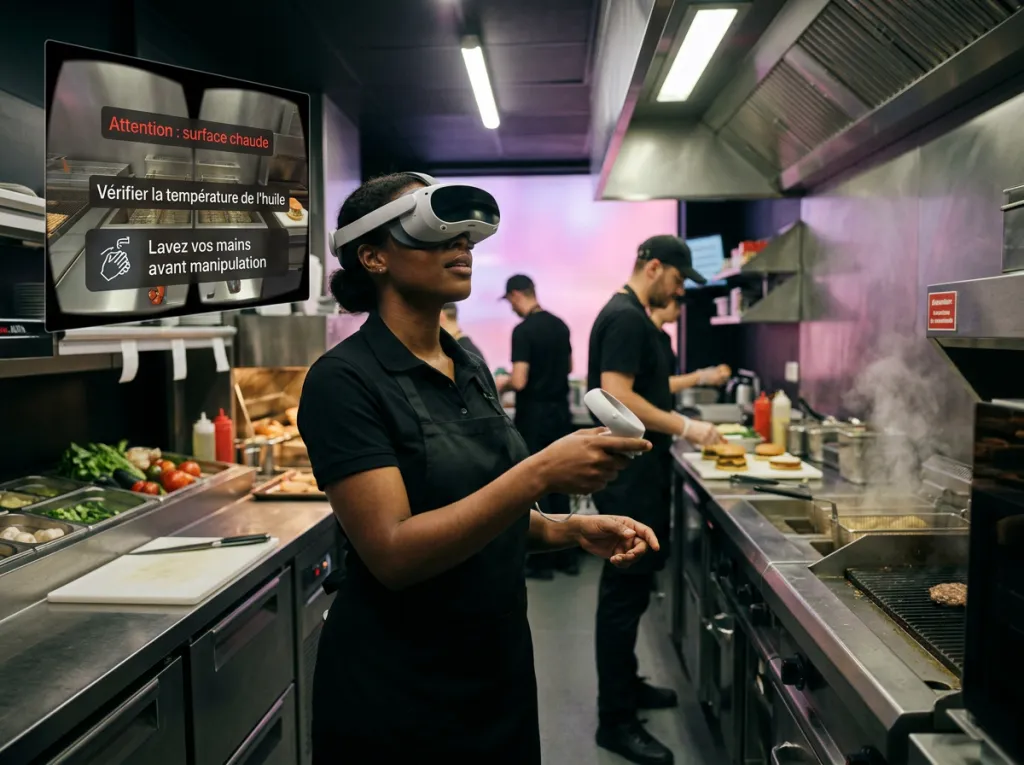
Virtual reality produces a measurable effect when training targets a gesture, a fast decision or a risky situation. It produces none when the subject is theoretical, legal or conceptual. That distinction explains most successful projects, and most of those abandoned after six months.
Three conditions come up consistently in deployments that last.
The first concerns the nature of the subject. If the gap between what people know and what they do is wide, putting them in the situation adds something. An operator who knows the lockout procedure by heart but skips a step under pressure fits exactly that case. An employee who needs to understand a profit sharing scheme does not.
The second concerns the cost of a real mistake. The more an error costs, the more valuable consequence-free rehearsal becomes. That holds for food safety, workstation safety, live maintenance and tense customer situations.
The third concerns frequency. A rare but critical gesture is the ideal candidate: nobody can repeat it in real conditions, and yet it has to be right first time.
Projects that stall almost always share the same three causes.
Buying hardware before defining content comes first. A company orders twenty headsets, hands them out, then discovers it only has two modules to put on them. The kit sits in a cupboard within a quarter. The logical order is the reverse: content first, device second.
Then comes logistics. A headset that has to be charged, cleaned, paired and updated is a real daily load for a site manager who is already busy. If nobody is assigned to that work, the scheme stops without any formal decision.
Finally, the absence of measurement. A scheme that produces no indicators cannot defend its budget at the next review. Immersive training has to report the real level of the teams, not just a completion rate.
Both technologies share a name in everyday language but answer different needs.
| Criterion | 360° video | 3D environment |
|---|---|---|
| Visual realism | The real place, with its light and clutter | A reconstruction, more or less faithful |
| Production cost | Low to moderate, filmed on site | High, full modelling required |
| Lead time | A few weeks | Several months |
| Freedom of movement | Limited to filmed viewpoints | Full, within the modelled space |
| Object handling | Targeted interactions | Fine manipulation possible |
| Updates | New shoot or new edit | Model modification |
360° video fits when the point is recognising the environment, deciding, and following a procedure. 3D becomes necessary when the learner has to dismantle a part, move freely or handle an object precisely.
The return on an immersive scheme shows up in indicators that existed before it. That is the only way to defend it seriously.
A scheme that moves none of those five indicators after six months has a design problem, not an adoption problem.
The safest start is to pick one situation, the one costing you the most today, and treat it fully on a pilot site. One topic, one site, one quarter.
Start on mobile rather than headsets. That removes the hardware, charging and hygiene questions, and lets you verify team uptake before any investment. Headsets come later, on the sites where full immersion genuinely adds something.
Set the success indicator before starting, not after. Without a target agreed in advance, next quarter’s budget conversation will run on impressions.
We run a full 360° scenario in twenty minutes, matched to your activity.
Request a demo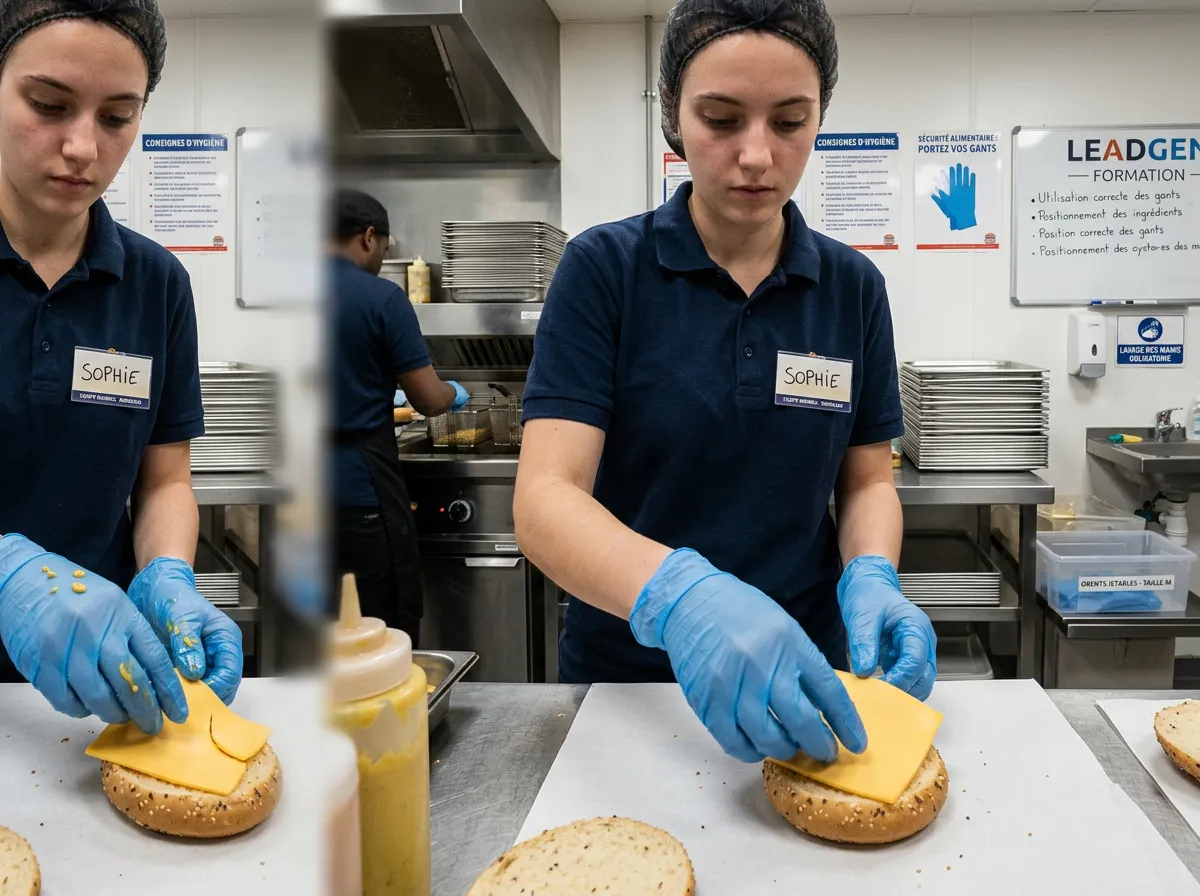
Non-conformities found during inspections rarely reflect missing knowledge. They reflect gestures that give way during the rush.
Read the article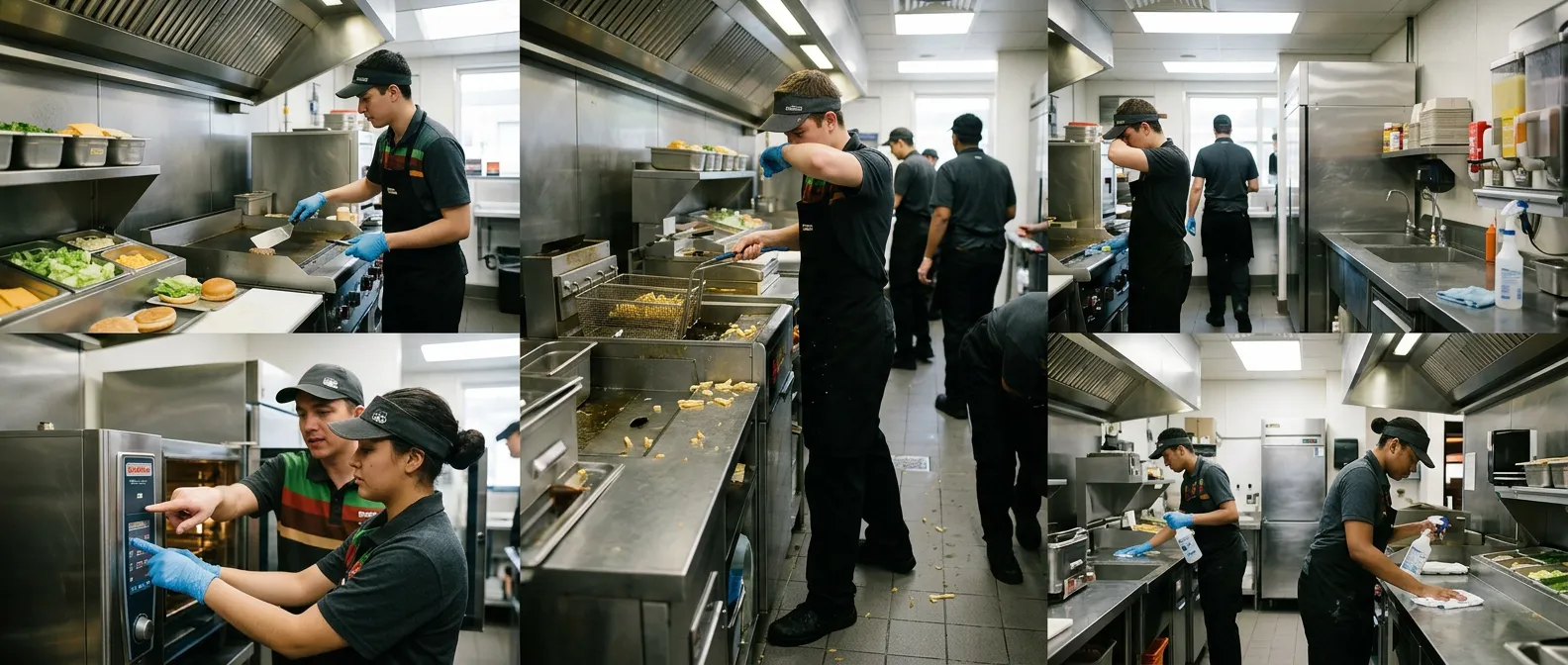
The cost of a new starter is not measured in training hours. It is measured in hours taken from the existing team, and that line is rarely calculated.
Read the article