Virtual reality training in companies: what works and what fails
VR does not solve a training problem, it solves an application problem. Here is where it produces a measurable effect, and where it burns budget for nothing.
Read the article
Non-conformities found during inspections rarely reflect missing knowledge. They reflect gestures that give way during the rush.
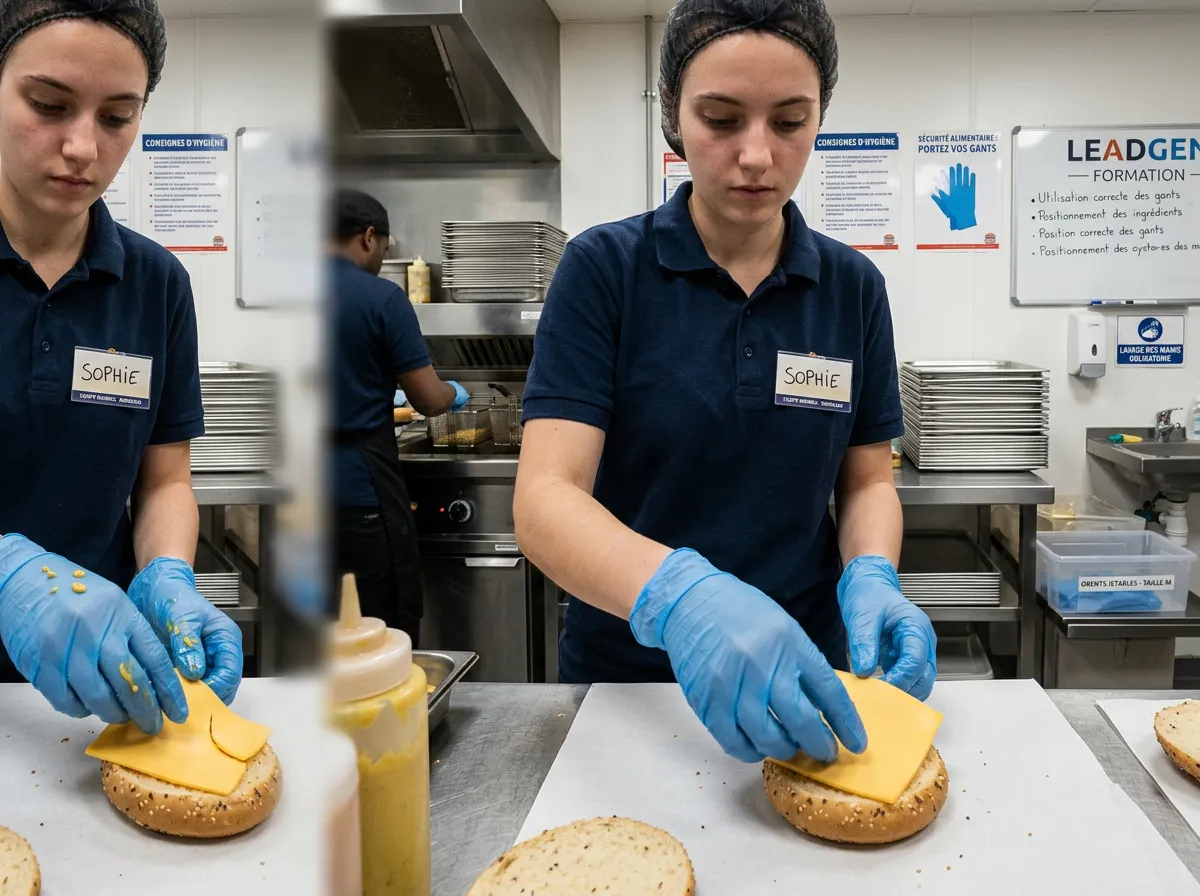
Non-conformities raised during food safety inspections rarely reflect a knowledge gap. They reflect known gestures that give way under service pressure, in young teams where turnover erases the effect of training within months.
Ask any crew member how often hands should be washed. The answer is almost always right. Watch the same person at one in the afternoon with fifteen orders waiting, and the result changes.
This is not a willingness problem. It is a trade-off problem under constraint. When time runs short, the brain drops whatever has no immediate visible consequence first. Hygiene is precisely a domain where the consequence arrives later, and rarely in a traceable way.
Three mechanisms weaken traditional schemes in foodservice.
The first is the time lag. Training happens at hiring, in a room, off shift. The gesture happens three weeks later, in the kitchen, under pressure. In between, procedural memory has not been called on once.
The second is word of mouth transfer. A new starter mostly learns by watching a colleague. They inherit that colleague’s habits, good and bad, and the drift from standard passes down from one crew generation to the next.
The third is turnover. In a sector where a large share of the workforce changes every year, a training effort that cannot be repeated loses its effect mechanically.
Short immersive rehearsal acts on all three mechanisms at once. It can be replayed before a shift rather than once a year. It presents the standard directly, without passing through a colleague’s interpretation. And it applies to every new starter without a single extra trainer hour.
The decisive point is not immersion itself. It is being able to repeat the situation as often as needed, at almost zero marginal cost.
Based on the non-conformities raised most often in commercial catering, five topics deserve priority.
Those five cover most inspection findings, and they are also the ones best suited to a short practical scenario.
Statutory food hygiene training remains required and cannot be replaced. It establishes a knowledge base and formal traceability.
Immersive rehearsal works on a different plane: daily application, between statutory sessions. The two do not compete, they address different problems. Confusing them leads to overestimating the protection a training certificate offers during an inspection that actually observes gestures.
We run a full 360° scenario in twenty minutes, matched to your activity.
Request a demo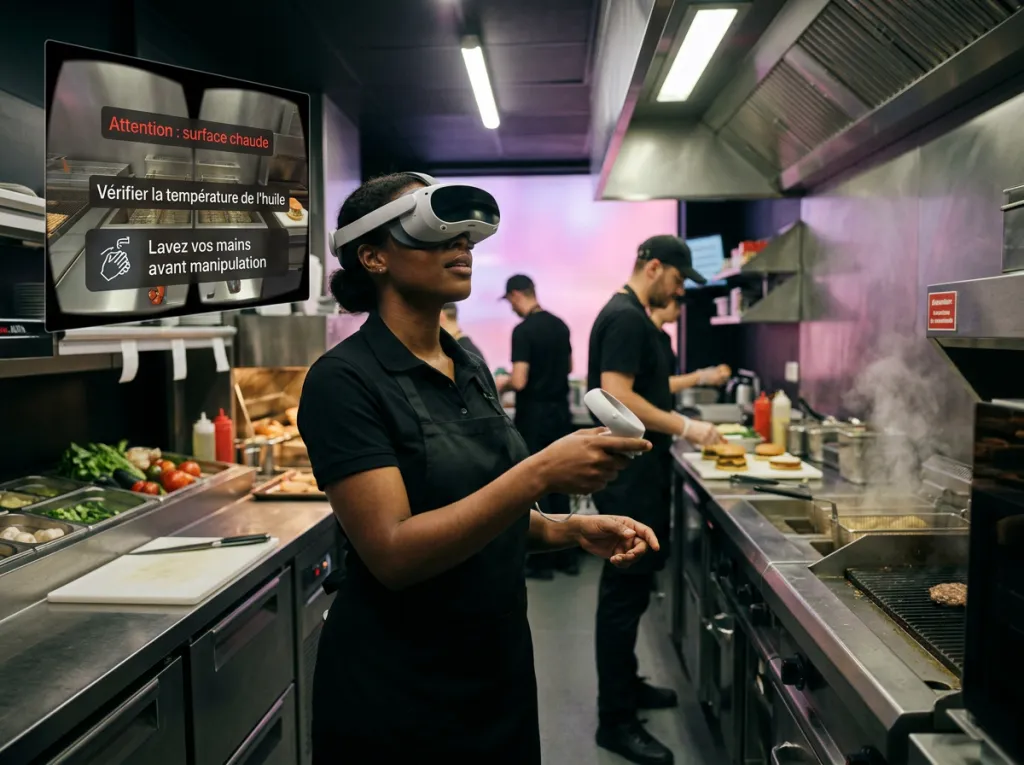
VR does not solve a training problem, it solves an application problem. Here is where it produces a measurable effect, and where it burns budget for nothing.
Read the article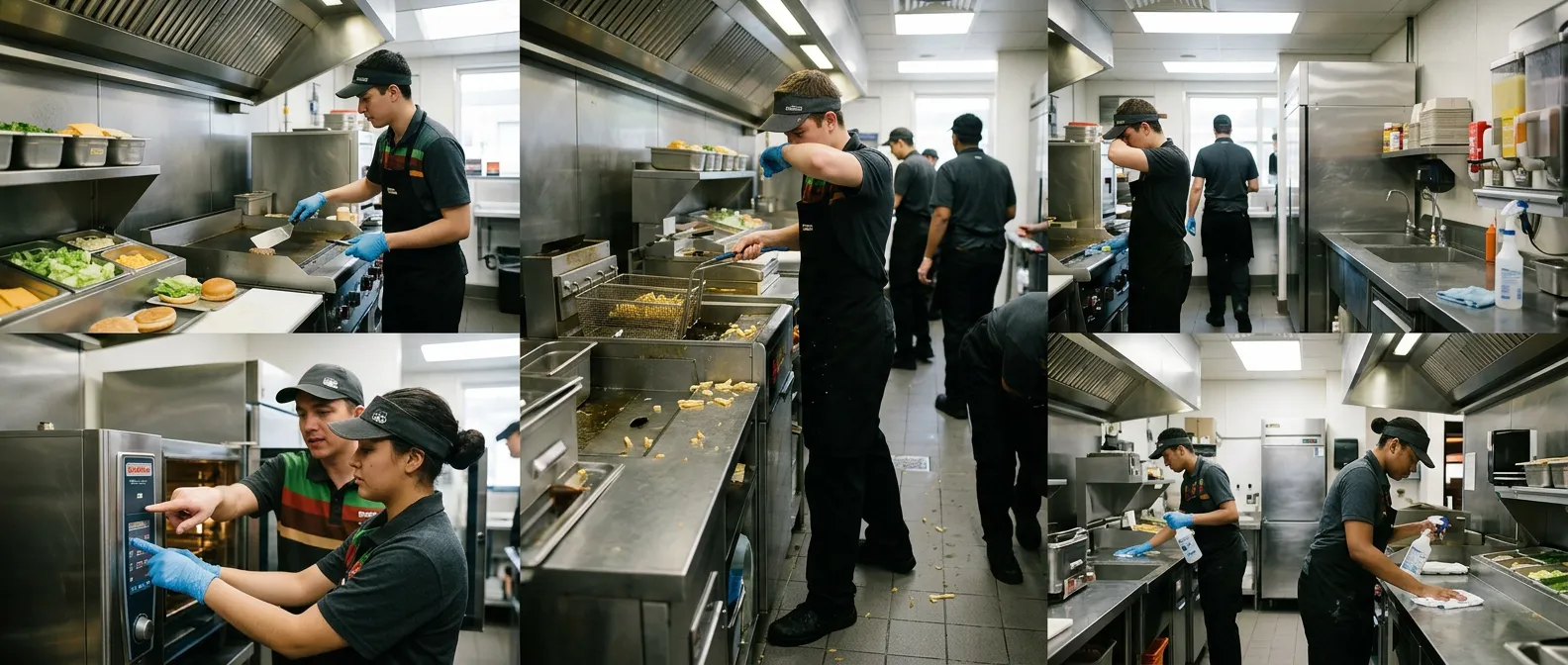
The cost of a new starter is not measured in training hours. It is measured in hours taken from the existing team, and that line is rarely calculated.
Read the article